

Amsterdam is a city most visitors explore on foot or by bike, but some of the most rewarding experiences lie just beyond its edges.
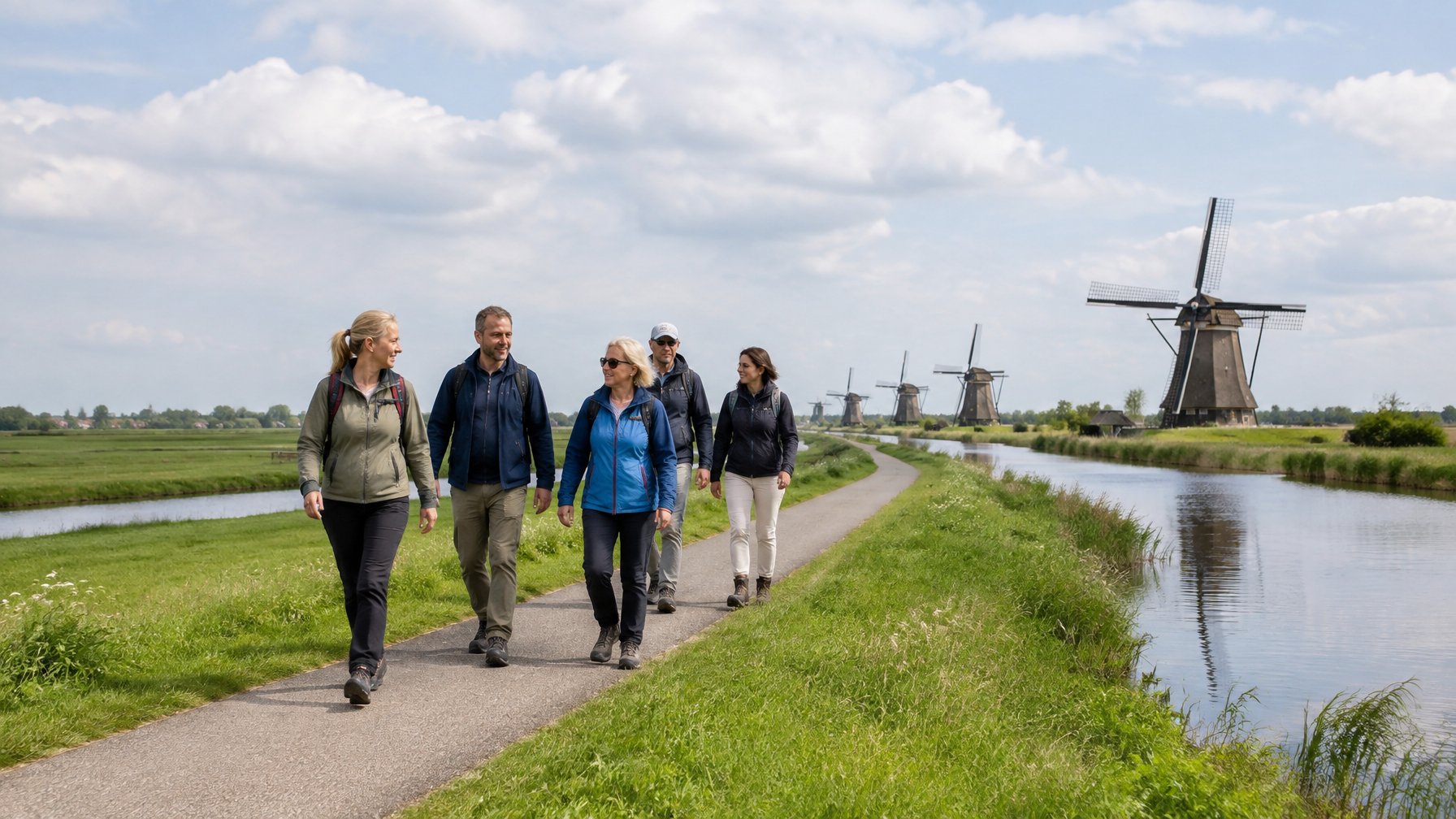
Within an hour you can be walking along a dike with windmills on the horizon, crossing polders where cows graze below sea level, or following a quiet waterway through villages that look much as they did centuries ago.
For walkers and outdoor lovers, the area around Amsterdam is flat, well signposted and easy to reach by public transport.
Here is how to plan guided day trips and walks from the city.
Why the Landscape Around Amsterdam Is Special
Much of the land around Amsterdam was reclaimed from water.
Over centuries, the Dutch built dikes, drained lakes and created polders, flat stretches of land kept dry by pumps and windmills.
Walking here is like reading a history book written in the landscape: every straight ditch, raised path and windmill tells a story about living with water.
The terrain is almost entirely flat, so routes suit walkers of all levels.
The challenge is not hills but wind and weather, which can change quickly.
Popular Day Trips
Zaanse Schans and the Zaan region
North-west of Amsterdam, the Zaanse Schans is a collection of historic windmills and wooden houses along the river Zaan.
It is busy at peak times, but walking routes along the river and through the surrounding area offer quieter views.
Waterland, Marken and Volendam
Just north of Amsterdam Noord lies Waterland, a region of meadows, small villages and waterways.
It is excellent for walking and cycling.
Marken, a former island now connected by a causeway, and Volendam, a fishing town on the former Zuiderzee, are popular destinations, and some tours combine them with a boat crossing.
Haarlem and the dunes
Haarlem, about fifteen minutes by train, has a beautiful historic centre.
From there, it is a short trip to the dunes and beaches of the Zuid-Kennemerland National Park, which offers sandy trails, woodland and the chance to spot wildlife.
Kinderdijk
Further away, near Rotterdam, Kinderdijk is a UNESCO World Heritage Site with a remarkable group of historic windmills.
It makes a longer day trip, often combined with a boat ride.
Guided Tours or Going Independently?
Both options have advantages.
Independent walkers can follow signposted routes, including walks that start and end at train stations, and travel at their own pace.
Guided tours add context and save planning time, which is helpful if you only have a day or two.
Tour operators in Amsterdam offer everything from small-group countryside trips to combined bus, boat and walking excursions.
A good guide brings the landscape to life with stories about water management, trade and village life.
If you are comparing options, this guide on how to choose a tour operator in Amsterdam explains what to look for, from group size to cancellation policies.
Starting From the Water
Many visitors begin with a canal cruise to get their bearings before heading into the countryside.
It is a relaxing way to understand how the city grew around its waterways.
KINboat, on the Prinsengracht, offers canal cruises and private boat hire for small and larger groups on fully electric boats.
Quiet electric boats suit anyone who wants to enjoy the canals without engine noise.
If you prefer to organise several activities in one place, Amsterdam Ticket Shop at Westermarkt, close to the Westerkerk, is a tickets and tour agency open every day, where you can also book boat tours with Smidtje Canal Cruises.
Best Seasons for Walking
Every season has its own character around Amsterdam.
Spring brings lambs in the meadows and, in the bulb region near Lisse, colourful fields of tulips and hyacinths.
Summer offers long evenings, ideal for walks that end with dinner in a village.
Autumn is quieter, with migrating birds over the wetlands of Waterland and dramatic skies.
Winter can be raw and windy, but crisp, clear days are perfect for brisk dike walks, and you will have the paths largely to yourself.
Whatever the season, check the forecast and wind direction before you set off.
What to Pack for a Day Walk
- Waterproof jacket: Dutch weather changes quickly, and wind is common on open polders.
- Comfortable, broken-in footwear: paths can be muddy after rain.
- Layers: it can feel much colder on a dike than in the city.
- Water and snacks: villages may have few shops, especially on Sundays.
- Offline maps: helpful where signal is weak.
- Public transport card or ticket: check return times before you set out.
Tips for a Great Day Out
- Start early to enjoy popular places before crowds arrive.
- Check opening times for windmills, museums and ferries, especially outside summer.
- Respect farmland: stay on paths and close gates.
- Watch for cyclists: bike paths are busy and fast, so walk on footpaths where possible.
- Combine modes: many great days mix train, ferry and walking.
Final Thoughts
Amsterdam’s canals are only the beginning.
A short trip from the city takes you into a landscape shaped by centuries of engineering and everyday life with water.
Whether you join a guided tour or set off on your own with a map and a sandwich, a day among windmills and dikes will show you a side of the Netherlands that many visitors never see.